Showing posts with label 10 Commandments. Show all posts

Thursday, October 26, 2017

Focusing on the Do’s, Rather Than the Don’ts

The question has often been asked, “Can Christians dance?” The real answer to the question is, “Some can, some can’t.” (Just like any other group of people!) Having been a churchgoer for most of my life, and a follower of Christ for nearly 40 years, I’ve often heard debates on the do’s and don’ts of living out our faith. These range from going to the movies or doing any kind of work on Sunday to whether drinking alcohol, even in moderation, is an absolute taboo.

We also find disagreement on a wide range of traditional practices, like baptism, communion, forms of worship, who are qualified for church leadership roles, and which version of the Bible to use.

Commandments in the Bible speak more about
what to do, rather than what not to do.
You could probably add other topics to the list. Most of these are subject for discussion – sometimes, even bitter dispute – because the Scriptures aren’t absolute on them, leaving room for interpretation and personal conviction. It seems a lot of time and energy is expended seeking to resolve the seemingly unresolvable, while failing to devote nearly as much attention and effort to indisputable matters.

We become so focused on the “don’ts,” we forget about the “do’s.”

For example, the Bible says we’re all responsible for telling others about Jesus, that it’s not just the job for paid professionals. However, studies indicate in the typical church, less than 10 percent of its members have spoken to even one person about Christ in the past year.

This despite the clear admonition, “How, then, can they call on the one they have not believed in? And how can they believe in the one of whom they have not heard? And how can they hear without someone preaching to them? And how can anyone preach unless they are sent? As it is written: ‘How beautiful are the feet of those who bring good news!’” (Romans 10:14-15). Nowhere does this suggest it applies only to pastors and missionaries.

Just before Jesus ascended to heaven after His resurrection, He gave His followers one final, ironclad mandate: “Therefore go and make disciples of all nations…teaching them to obey everything I have commanded you” (Matthew 28:19-20). And yet, every year new books and sermon series address the why’s and how’s of discipleship and disciplemaking, as if it’s a newly discovered, 21st century concept. We have Sunday schools and small groups, but relatively few congregations place emphasis on what Jesus commanded: to make disciples – devoted followers, learners and spiritual reproducers.

Nevertheless, His mandate is unquestionable. In 2 Timothy 2:2, the apostle Paul told his young protégé, “And the things you have heard me say in the presence of many witnesses entrust to reliable people who will also be qualified to teach others.” Later, while in prison, toward the end of his life, the apostle also wrote, “Whatever you have learned or received or heard from me, or seen in me – put it into practice. And the God of peace will be with you” (Philippians 4:9). In other words, be a disciple…and make disciples.

The Scriptures present numerous other “to do’s,” ranging from “love your neighbors as yourselves” (Matthew 22:39, Mark 12:31, James 2:8) and “Do to others as you would have them do to you” (Matthew 7:12), to numerous exhortations in both the Old and New testaments to serve and minister to the poor, the needy, widows and orphans, and the helpless.

We’re told to make others a top priority – “Do nothing out of selfish ambition or vain conceit. Rather, in humility value others above yourselves, not looking to your own interests but each of you to the interests of the others” (Philippians 2:3-4). As well as to be “salt and light,” to provide savor and illumination for an increasingly embittered and darkened world (Matthew 5:13-15).

These just scratch the tip of the Bible’s “iceberg” of positive commands. What if we spent as much time (or more) focused on the things we know without a doubt we should do, as we do commiserating about what we shouldn’t do? Perhaps more people would realize what we already know: That the gospel of Jesus Christ truly is Good News.

Thursday, February 6, 2014

The Bible: Cure or Vaccination?


My hometown, Chattanooga, Tennessee, recently was named America’s most “Bible-minded” city, based on a survey conducted by the American Bible Society with The Barna Group, a research organization that tracks spiritual trends across the nation and around the world.

The researchers defined “Bible-minded” people as “respondents who report reading the Bible within the past seven days and who agree strongly in the accuracy of the Bible.” Having lived here for more than 30 years – and dearly loving this unique community where we raised three daughters – I find this study’s results very interesting. Seems like the good news vs. bad news kind of deal.

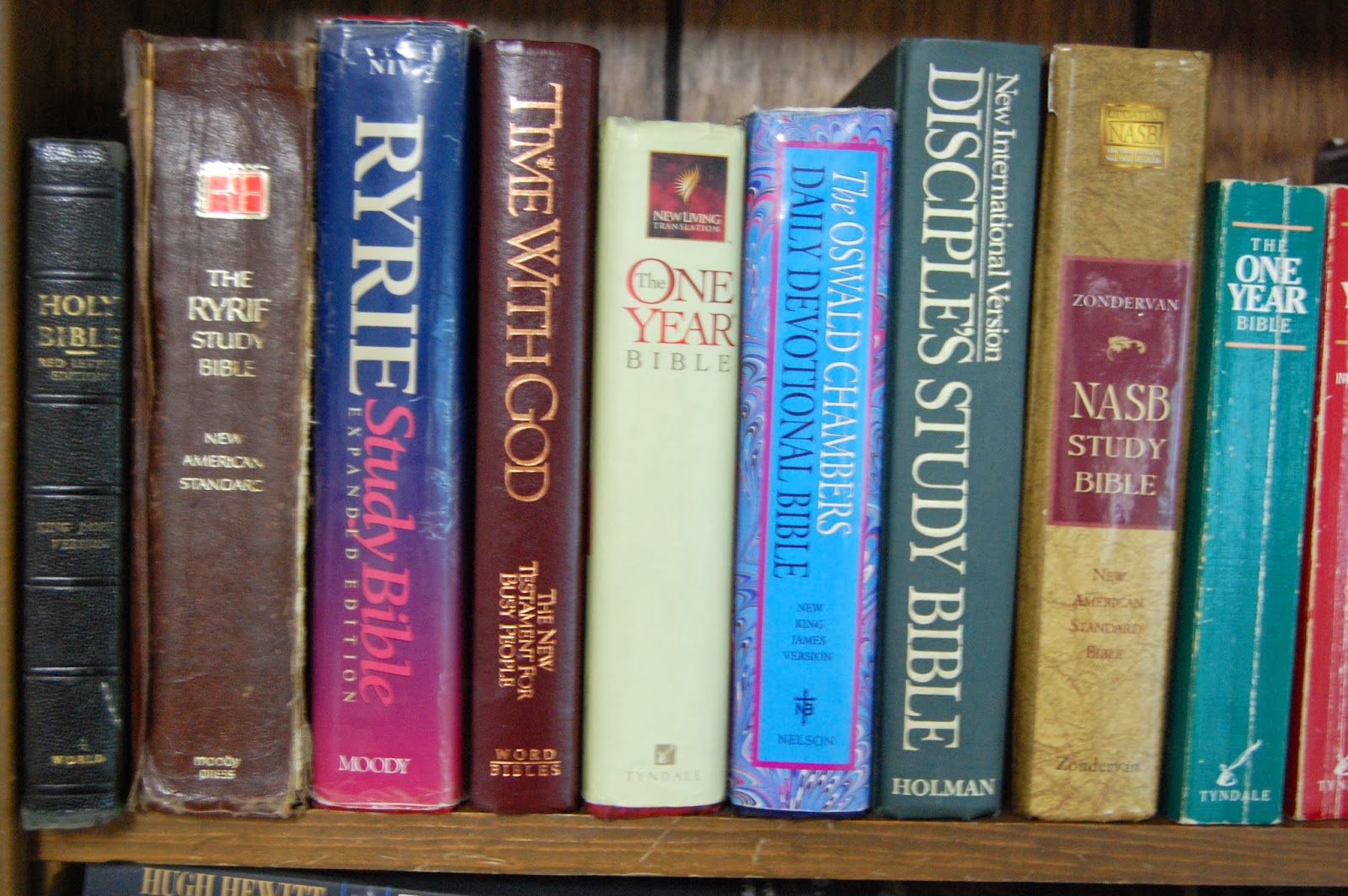
For many of us, the Bible is merely a reference book for
occasional use, or a space-eater on a bookshelf.
Being one who regularly reads the Bible, almost daily, and strongly believes in the accuracy and validity of the Scriptures, this sounds like good news. However, experience has taught me just reading the Bible – and even affirming the accuracy of what it says – doesn’t necessarily or automatically correlate to a changed life.

For instance, if you surveyed thousands of people and asked if they thought drunk driving was a bad idea, everyone would agree. And yet every day people drive drunk. If you inquired about whether people thought spending less than you earn is wise financial management, you wouldn’t find many in disagreement. Yet the vast majority of people live beyond their means, using credit cards and other forms of indebtedness to satisfy both needs and wants.

The same applies when people wholeheartedly affirm their confidence in the Bible. Take the 10 Commandments, for example: How many people would declare we should steal, should kill, should covet our neighbor’s spouse or possessions, should commit adultery, or should lie? Hardly any – but many of us do some of these things just the same.

And it’s the other commandments that trouble us the most – things like not worshipping any gods other than the God of the Bible; taking the name of God in vain, or observing the Sabbath as a true day of rest.

Sadly, the majority of people who profess to be followers of Jesus – including myself at times – treat the Bible as a general guideline, kind of like the out-of-bounds lines on a football field or basketball court. But sometimes, we think, it’s okay to step out of bounds – for the sake of convenience or expediency.

Other studies have shown so-called “Bible-minded” people might attend worship services more frequently, and they might have a different vocabulary than non-believing friends and neighbors, but in their everyday lives they don’t look much different. We divorce at almost the same rate as non-believers, seem equally seduced by materialism, we conduct business in like manner, and our charitable giving typically doesn’t amount to much more than those who never darken a church’s doors.

As someone has said, many of us are “so heavenly minded we’re no earthly good.”

What’s the solution? First, we need to dispense with our Western way of thinking – the mindset that says we can believe one way, but act quite differently. To truly believe is to act accordingly.

Second, we need to heed James 1:22-25, which admonishes, “Do not merely listen to the word, and so deceive yourselves. Do what it says. Anyone who listens to the word but does not do what it says is like a man who looks at his face in a mirror and, after looking at himself, goes away and immediately forgets what he looks like. But the man who looks intently into the perfect law that gives freedom, and continues to do this, not forgetting what he has heard, but doing it – he will be blessed in what he does.”

My intent is not to sound judgmental, because apart from the power of Jesus Christ we’re all imperfect and flawed, certain to betray our convictions from time to time. But as the apostle James wrote, it’s not enough to read the Bible and listen to it being taught from a pulpit. We need to do what it says.

Otherwise, instead of serving as the cure for ungodly thinking and behavior, it becomes merely a vaccination – giving us just enough so that we don’t catch, and exhibit, the real thing.